


Essential Florida Rainy Season Cleaning Tips for a Fresh Dry Home

Florida rain does not ease in quietly. One afternoon storm can soak the patio, push damp air through the house, and leave muddy tracks across clean floors before dinner. By fall, many homes are still dealing with high humidity, heavy downpours, and the first signs of seasonal buildup.
The good news is that a clean, dry home during Florida’s rainy season does not require perfection. It takes a few smart habits, the right supplies, and a plan for the places moisture likes to hide. These Florida rainy season cleaning tips will help you prepare for fall weather, control mold risk, protect outdoor spaces, and keep the inside of your home feeling fresh.
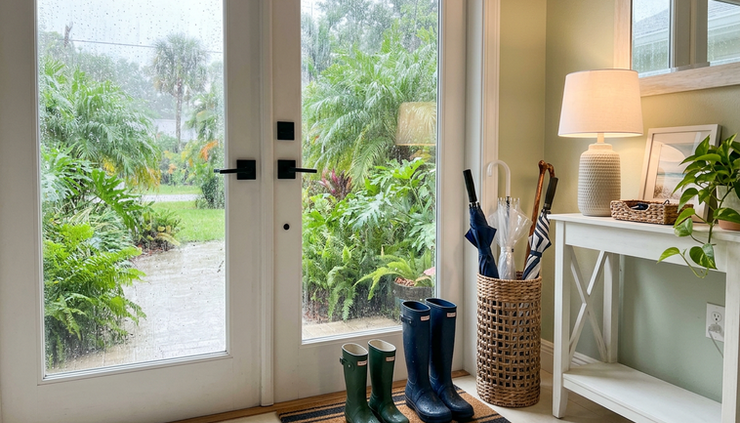
Get your home ready before fall rain settles in
Fall in Florida can feel different from fall in other parts of the country. Instead of crisp dry air, many homes face lingering humidity, tropical moisture, and strong afternoon storms. That makes early preparation worth the effort.
Start with the areas that take the most abuse during wet weather.
Clean and inspect entry points
Doors, sliders, and garage entrances are common places for water, mud, and grit to enter. Give them a careful cleaning before the rainiest stretch begins.
Wipe door frames, thresholds, tracks, and weatherstripping with a mild all-purpose cleaner. Pay close attention to sliding glass door tracks, which often collect sand, leaves, and water. A small brush or old toothbrush works well for loosening grime in corners.
Once the area is clean, check for:
Cracked or loose weatherstripping
Dirty door sweeps
Clogged slider tracks
Gaps where water could blow in during a storm
Musty smells near baseboards or corners
Cleaning does not replace home repair, but it helps you notice small problems before they become bigger ones.
Create a wet weather drop zone
A rainy season drop zone keeps the mess contained. Place it near the door your household uses most.
A practical setup can include:
A water-absorbent indoor mat
A rough outdoor mat for scraping shoes
A small basket for sandals or wet shoes
Hooks for rain jackets and umbrellas
A washable towel for quick floor wipe-ups
Choose mats that can dry quickly. Thick rugs with rubber backing can trap moisture against tile, wood, or laminate if they stay wet too long. If a mat feels damp hours after a storm, hang it outside or over a shower rod until it dries.
Wash windows and screens
Rain often leaves minerals, pollen, and leaf debris on windows. Clean glass improves light inside the home, which can make rooms feel fresher even during cloudy weather.
Remove loose dirt first. Then wash glass with a streak-free window cleaner or a simple mix of water and a small amount of dish soap. Clean screens gently with a soft brush, then rinse and dry them outside.
Do not forget window tracks. These small channels can hold moisture and organic debris, which creates a perfect place for mildew odors to start.
Control humidity before mold gets comfortable
Humidity is the biggest cleaning challenge during Florida’s rainy season. When air stays damp, surfaces dry slowly. That gives mold and mildew more time to develop, especially in bathrooms, closets, laundry areas, and rooms with poor airflow.
A home can look clean and still feel musty if moisture is trapped in the air, fabrics, or hidden corners.
The goal is simple. Keep air moving, dry wet surfaces quickly, and clean small problem spots before they spread.
Use ventilation every day
Bathrooms need extra attention during rainy weather. Run the exhaust fan during showers and keep it on for a while afterward. If the bathroom does not have a working fan, open a window when weather allows, and wipe down wet walls or glass after use.
In the kitchen, use the range hood when cooking, especially when boiling water or steaming food. Moisture from daily activities adds up fast when the outdoor air is already heavy.
Ceiling fans can also help, but they do not remove moisture. They move air so surfaces dry faster. For best results, use fans along with air conditioning or a dehumidifier.
Keep indoor humidity in check
Air conditioning helps remove moisture as it cools the air. During rainy months, avoid turning the system off for long periods, especially when leaving for a weekend. A warm, closed-up home can become damp quickly.
A portable dehumidifier can help in spaces that feel clammy, such as:
Laundry rooms
Enclosed porches
Closets
Guest rooms
Basements or lower-level spaces, where present
Empty and clean the dehumidifier tank often. A dirty tank can create odors and spread them back into the room.
Clean mold-prone areas on a schedule
Some areas deserve weekly attention during wet weather. These include shower grout, tub edges, sink drains, under-sink cabinets, refrigerator door seals, and washing machine gaskets.
For light mildew on hard, nonporous surfaces, use an appropriate bathroom cleaner, hydrogen peroxide cleaner, or diluted bleach solution when the surface allows it. Always read the label first.
Never mix bleach with vinegar, ammonia, or other cleaning products. Mixing cleaners can create dangerous fumes. Use one product at a time, ventilate the area, and rinse surfaces if the label directs you to do so.

Choose cleaning products that handle dirt and moisture
Rainy season cleaning works best when your supplies match the mess. Florida homes often deal with sand, mud, wet shoes, damp towels, mildew odors, and outdoor grime tracked inside.
You do not need a cabinet full of specialty products. A small set of reliable cleaners can cover most rainy season jobs.
Cleaning need | Helpful product | Best use |
Muddy floors | pH-neutral floor cleaner | Tile, sealed stone, luxury vinyl, and other washable hard floors |
Mildew-prone bathroom surfaces | Bathroom cleaner or hydrogen peroxide cleaner | Shower walls, grout, tubs, and sinks |
Musty fabrics | Laundry sanitizer or oxygen-based booster | Towels, bath mats, washable curtains, and cleaning cloths |
Glass and sliders | Streak-free glass cleaner | Windows, mirrors, and sliding doors |
Outdoor grime | Mild dish soap or outdoor surface cleaner | Patio furniture, planters, and washable exterior surfaces |
Odors | Baking soda | Trash cans, shoe areas, and washable bins |
Pick floor cleaners carefully
Tile is common in Florida homes because it handles wet weather better than many flooring types. Still, grime can settle into grout lines. Vacuum or sweep first so sand does not scratch surfaces. Then mop with a cleaner suited to the floor.
Avoid soaking floors. More water does not mean cleaner floors. It often means longer drying time and more streaks. Use a damp mop, rinse when needed, and run a fan afterward if the room feels humid.
For wood or laminate floors, use a lightly damp microfiber mop and a cleaner made for that surface. Standing water can damage seams and edges.
Use microfiber for rainy season cleaning
Microfiber cloths are especially useful during wet weather because they grab fine dirt, dust, and moisture without leaving much lint behind. Keep a stack near the kitchen or laundry room for quick wipe-downs.
Use different cloths for different zones:
One color for bathrooms
One color for kitchen surfaces
One color for floors and entryways
One color for glass and mirrors
Wash microfiber separately from heavy cotton towels when possible. Skip fabric softener, which can reduce absorbency.
Freshen fabrics that hold damp smells
Soft surfaces can make a clean home smell musty. Wash bath mats, kitchen towels, pet towels, throw blankets, and slipcovers more often during rainy periods.
Dry items fully before folding or storing them. If towels smell sour after washing, do not mask the odor with fragrance. Rewash them with a laundry booster suited to the fabric, then dry completely.
For cushions and pillows that cannot go in the washer, air them out on a covered patio during a dry part of the day, or place them in a sunny indoor spot near airflow.
Keep outdoor spaces clean through heavy rain
Florida outdoor living areas work hard during rainy season. Patios, lanais, pool decks, and front porches collect leaves, dirt, algae, and standing water. A little routine cleaning makes these spaces safer and easier to enjoy when the weather clears.
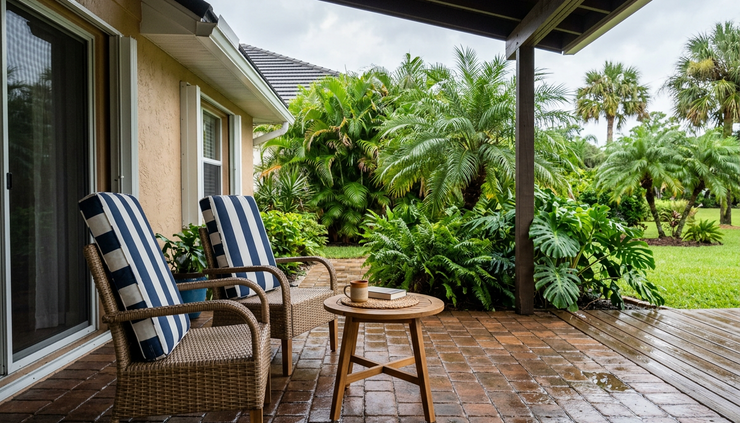
Clear leaves before they stain
Wet leaves can stain concrete, pavers, and outdoor rugs. They can also block drainage and trap moisture against surfaces.
After storms, quickly clear:
Patio corners
Door thresholds
Pool cage edges
Walkways
Exterior steps
Drain covers
A blower, outdoor broom, or flexible rake can make this task fast. If leaves sit for days, they become harder to remove and may leave marks behind.
Watch for algae on walkways
Rain and shade can lead to slippery green buildup on sidewalks, steps, and patios. Clean these areas before they become a fall hazard.
For many outdoor surfaces, a stiff brush, water, and mild outdoor cleaner can remove light buildup. For larger areas, a pressure washer may help, but use care. Too much pressure can damage pavers, wood, grout, screens, and painted surfaces.
If you use any outdoor cleaner, rinse nearby plants before and after, and follow the product label.
Protect patio furniture and cushions
Outdoor cushions may be made for weather, but they still need airflow. After heavy rain, stand cushions on their sides so water can drain. Wipe hard furniture surfaces with a mild soap solution, then dry them with a towel when possible.
Store smaller fabric items in a dry bin or deck box. Check the inside of storage containers often. If moisture gets trapped inside, mildew can develop even though the items are technically “put away.”
Keep gutters and drains clear
Clean gutters and clear drains help move rainwater away from your home. Leaves, pine needles, palm debris, and roof grit can clog these areas quickly.
From the ground, look for signs of trouble during a storm:
Water spilling over gutter edges
Pooling near the foundation
Mud splashing onto walls
Slow drainage on patios or driveways
Water collecting near exterior doors
Hire a professional for high or difficult gutter work. Cleaning is important, but safety matters more.
Keep interiors fresh, dry, and comfortable
Once the outside mess is under control, focus on daily habits that keep indoor air and surfaces fresh. Small routines make the biggest difference, especially during weeks of repeated rain.
Do quick daily resets
A daily reset does not need to take long. Aim for the areas where moisture and odor build up fastest.
Try this simple 10-minute routine after storms or at the end of the day:
Shake or hang wet mats so they can dry.
Wipe entry floors where shoes tracked in water.
Hang damp towels with space between them.
Empty small trash cans that hold food or wet items.
Run bathroom fans after showers or cleaning.
Open closet doors briefly to improve airflow.
These habits help prevent that closed-up, damp-house smell.
Give closets some breathing room
Closets often have poor airflow. In humid weather, tightly packed clothes can start to smell stale. Leave a little space between stored items, especially along exterior walls.
Use moisture absorbers in closets if they tend to feel damp. Replace them as directed. Avoid placing cardboard boxes directly on the floor in humid areas. Plastic bins with secure lids are better for items you rarely use, but make sure anything stored inside is completely dry first.
Shoes also need attention. Let wet shoes dry before placing them in a closed closet. A small shoe rack near the entry can help.
Clean air vents and replace filters
Dusty vents can spread stale odors when the air conditioning runs. Wipe vent covers with a damp microfiber cloth, then dry them. If vents show heavy dust buildup or dark staining around the edges, look for causes such as dirty filters, gaps, or excess indoor dust.
Replace HVAC filters on a regular schedule based on the filter type, household needs, and system recommendations. Homes with pets, allergies, or frequent door traffic may need filter changes more often.
Keep kitchens dry after cooking and cleaning
Kitchens collect moisture from sinks, dishwashers, cooking, and wet sponges. During rainy season, wipe counters dry after cleaning instead of letting them air dry.
Pay attention to:
The area behind the faucet
Under the dish rack
Cabinet fronts near the sink
The trash can lid
The refrigerator gasket
The floor near pet bowls
Replace sponges often, or switch to washable dish cloths that can dry between uses. A damp sponge in a humid kitchen can sour quickly.
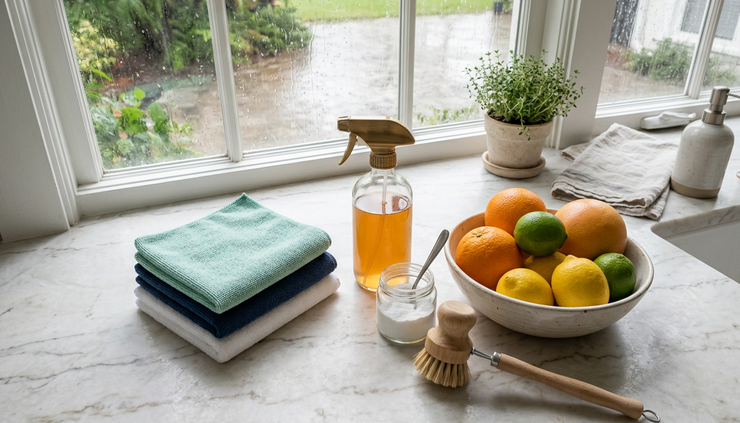
Build a simple rainy season cleaning rhythm
Rainy season cleaning feels easier when tasks are spread out. Instead of waiting for musty smells or muddy buildup, use a light schedule that fits normal life.
A useful rhythm might look like this:
After each heavy rain
Wipe entry floors, hang wet mats, clear leaves from doorways, and check for standing water on the patio.
Once a week
Scrub bathroom trouble spots, wash towels and bath mats, clean door tracks, shake outdoor rugs, and wipe patio furniture.
Once a month
Clean window tracks, wash screens where needed, check closets for musty odors, wipe air vents, and inspect under sinks.
At the start of fall
Refresh the drop zone, replace worn mats, clean gutters if needed, wash outdoor cushions, check weatherstripping, and restock basic cleaning supplies.
This kind of routine keeps cleaning manageable. It also helps you notice changes in your home, such as a new leak, a damp closet, or a patio drain that suddenly runs slowly.
A fresh, dry home starts with moisture control
Florida’s rainy season brings plenty of mess, but most of it can be managed with steady habits. Stop water and dirt at the door. Keep bathrooms, kitchens, and closets dry. Use the right cleaners for mildew, mud, and damp fabrics. Give outdoor spaces enough attention so rainwater can move away from the house.
The main takeaway is simple: cleaning during rainy season is really moisture management. When surfaces dry faster and air keeps moving, your home smells better, feels fresher, and stays easier to maintain all the way into fall.


Comments